
Psychological Assessment & Psychotherapy
Understanding the whole child
Clinical assessment and child psychotherapy delivered by our clinical psychologists.
- Cognitive assessment
- Behavioural support
- Emotional regulation
- Family counselling
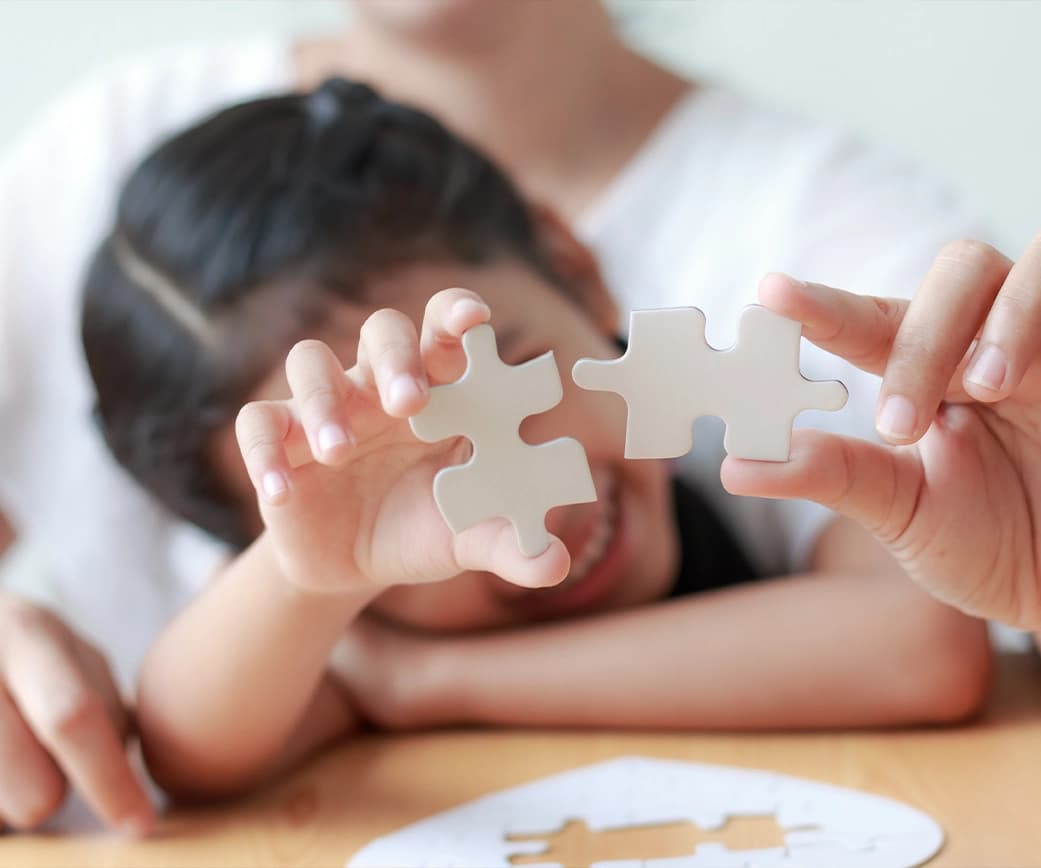
What is psychological assessment & psychotherapy?
Clinical assessment and child psychotherapy led by our clinical psychologists — helping families understand a child's cognitive, emotional and behavioural profile and the right path forward.
Signs your child may benefit
- Concerns about development, learning or behaviour needing formal assessment
- Anxiety, big emotions or difficulty with regulation
- Behavioural challenges at home or school
- Families seeking clarity and a plan after an initial referral
Our approach
Evidence-based assessment using validated tools, followed by clear feedback and, where helpful, child-centred psychotherapy and family guidance.
What to expect
An assessment session and a written summary of findings and recommendations, with ongoing therapy or referrals arranged as needed.
Common questions about autism (asd)
- Why does my child have autism (ASD)?
- There is no single known cause. Both genetics and environment are thought to contribute. Importantly, it isn't caused by parenting — and identifying a 'reason' matters far less than starting the right support early.
- What are the levels of autism spectrum disorder?
- ASD is described in three support levels: Level 1 (requiring support), Level 2 (requiring substantial support), and Level 3 (requiring very substantial support). The level reflects how much day-to-day support a child needs.
- Can autism occur alongside other conditions?
- Yes. ASD frequently co-occurs with conditions such as language disorders, learning difficulties, intellectual differences, epilepsy, and sleep difficulties. A thorough assessment looks at the whole child.
- What are some common myths about autism?
- A common myth is that autistic people don't feel emotions or can't empathise — they do; they often just experience and express emotions differently. Another is that every autistic child has a 'special talent'. Each child is an individual.
- Why is early diagnosis of autism important?
- Early diagnosis allows intervention during the years when the brain is most adaptable. Starting support early tends to improve communication, learning and adaptive skills, and better long-term outcomes.
Recommended reading
When your child melts down: what to do in the moment (and after)
A calm, practical playbook for the hard moments — how to respond during a meltdown, how to repair afterwards, how to spot triggers, and when to seek help.
6 min read →LearningGetting a dyslexia assessment in Malaysia: when, where & what happens
Suspect dyslexia? A practical walk-through of the assessment pathway — when to screen, who can diagnose, what the assessment involves, and what support comes after.
6 min read →LearningSlow learner or learning difficulty? How to tell — and how to help
Is your child a slow learner, or is something more specific going on? How to tell the difference, when to seek an assessment, and practical ways to help at home and school.
6 min read →